Devonshire Quarranden
Accession no. YPC.2018.33. Planted Dec 2018
Malus domestica. Early, Dessert. Origin Oxon. c.1676
Sponsored by Kim Overbeck
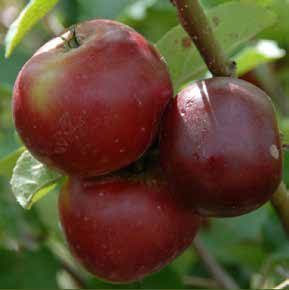
Devonshire Quarranden was first recorded by John Worlidge in 1676. It was thought to have originated from Devon but may have been introduced from France, taking its name from Carentan in Normandy. It was a popular dessert variety in Victorian times where it was widely grown and sold in markets as ‘Quarantine’.
Devonshire Quarranden is a spreading tree of weak vigour and the fruit are borne on spurs. It is self- fertile but pollination by another variety from groups 1, 2 or 3 will maximise yield.
It is recommended by the RHS to be an excellent attractant and nectar source for bees and other beneficial insects, including night flying moths which may encourage bats into the garden.
The apples ripen very early in August and are best eaten straight off the tree. The apples are small to medium- sized with smooth, pale greenish yellow skin and almost completely covered with a dark crimson flush. The flesh is white and sometimes streaked with pink, is crisp and juicy but goes soft quickly once picked. The apples are sweet with some acidity with a distinctive strawberry flavour. They are mainly used for eating but can also be juiced.