Beauty of Bath
Accession no. YPC.2018.18. Planted Dec 2018
Malus domestica. Early, Dessert. Origin Oxon. c.1864
Sponsored by Graham & Yvonne Thompson
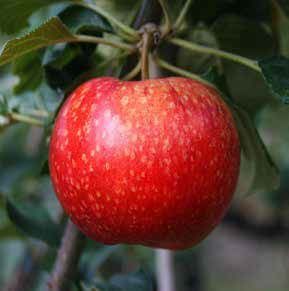
Beauty of Bath was propagated in 1864 by George Samuel Bradley at Elton Manor in Nottingham Cooling near Bath and awarded an RHS First Class Certificate in 1887. It was grown commercially in Victorian times because it was one of the earliest -ripening varieties available, as well as being a heavy cropper with good disease resistance.
Today it is mostly grown in gardens as it does not keep well and is best picked by hand and eaten off the tree. The tree is medium sized with a fairly spreading habit and tends to be tip- bearing. It is not self fertile and will need pollinating from Groups 1,2 and 3.
The apple has a flattened shape with attractive red-flushed colouring which is also found in its well-known descendant Discovery. Another common characteristic is the way the red skin will bleed into the flesh in both apples. The fruit tastes sharp at first but sweetens later and can be both eaten and used for juicing.
The apples are usually ripe by August but can drop off early, often when completely ripe. They are best eaten straight off the tree as do not store well.