Bramley’s Seedling
Accession no. YPC.2018.08. Planted Dec 2018
Malus domestica. Late, Cooking. Origin Oxon. c.1809
Sponsored by Renee Charlett
"In loving memory of John Edward Charlett 1928-1994"
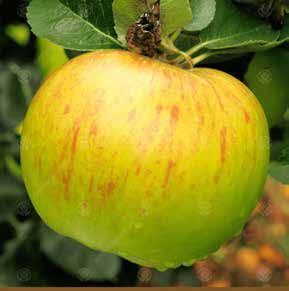
Bramley’s Seedling is the most popular of the cooking apples in the UK. It was planted as a pip by a young girl Mary Ann Brailsford in 1809 and the original tree was still alive in the same garden in Nottinghamshire in 2009 which marked the 200th anniversary of its discovery. It takes its name from a subsequent owner of the house and garden, a Mr Bramley who allowed a local nurseryman to propagate it in the 1850’s on condition that it was given his name.
The trees are very vigorous and can grow to 2.5 – 8 metres in height and width depending on the rootstock. It needs two pollinating apple trees nearby (from groups 2,3 or 4) to ensure successful pollination. The pale pink flowers are followed by fruit which ripen around October and can be stored and used until March.
The apple is large and flat- bottomed and the white flesh cooks to a fluffy puree which is favoured for baking and apple pies. The distinctive sharp flavour mellows with storage and the raw apple contains 2.5 times more vitamin C than the average apple. The apples make excellent juice especially when mixed with other apple varieties and it is also added to
many ciders.